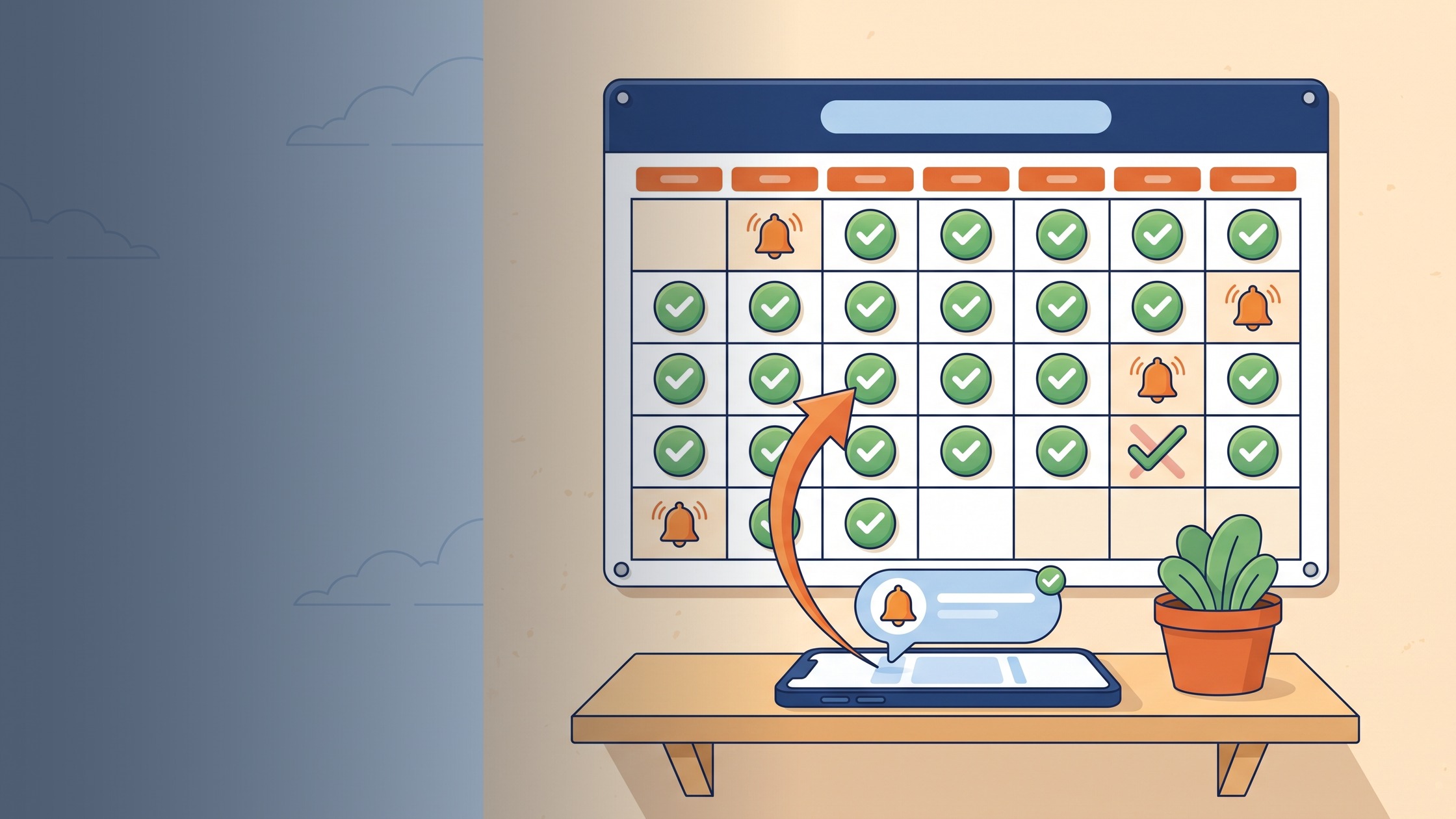

Learning how to reduce no-shows is one of the highest-return things a practice owner can do, because every missed appointment is two losses at once: lost revenue for you and lost momentum for the client. A booked appointment is not a kept appointment, and the gap between the two is where a surprising amount of a practice’s income quietly disappears. The encouraging part is that no-shows respond well to a few simple systems, most of which run on their own once set up.
The data shows just how much the booking experience matters. A peer-reviewed study in Frontiers in Digital Health found that appointments booked online had a no-show rate of 1.8 percent, compared with 5.9 percent for those booked offline. How someone books, and how you remind them, changes whether they show. At William & Friends, we build the reminder and booking systems that keep your calendar full and your clients in care.
TL;DR
No-shows drain revenue and stall client progress, but they are very fixable. The biggest levers are well-timed reminders, easy online booking and rescheduling, light pre-session engagement, and a warm, non-punitive tone. Online booking alone dramatically lowers no-show rates, and automated reminders close most of the remaining gap. The goal is not to punish missed sessions, it is to make showing up the easy, expected default, with systems that run automatically so your team is not chasing anyone.
Key Points
- A no-show is two losses. Lost revenue for you, lost momentum for the client.
- How they book matters. Online booking holds appointments far better than phone booking.
- Reminders work. Well-timed reminders close most of the remaining gap.
- Tone matters. Warm and helpful beats punitive every time.
- Make rescheduling easy. A simple reschedule beats a silent no-show.
- Automate it. The system should run without your team chasing anyone.
- Momentum is clinical. Clients who keep showing up get better outcomes.
Why clients no-show in the first place
Most no-shows are not about disrespect. They are about friction, anxiety, and forgetfulness. A client books two weeks out, life gets busy, the appointment slips, and there is no easy nudge or reschedule path, so they simply do not come. For someone ambivalent about therapy in the first place, any friction becomes a reason to skip.
There is a clinical cost to this too. Meta-analytic research on psychotherapy dropout shows a meaningful share of clients leave treatment earlier than planned, and missed sessions are often the first step out the door. Reducing no-shows is not just protecting revenue, it is helping people stay in care long enough to benefit.
The systems that actually reduce no-shows
You do not need to police your clients. You need to remove friction and add gentle, well-timed nudges.
Move booking and rescheduling online
The single biggest structural lever is easy online booking, ideally connected to your practice software. It lowers no-shows on its own, and it makes rescheduling a two-tap action instead of an awkward phone call. We handle this through EHR integration, so booking flows straight into the system your clinicians already use. Patients increasingly expect it, too: TechTarget reports that most prefer providers who offer online scheduling.
Send reminders that feel human
Automated reminders, timed to your booking-to-session window, are the workhorse of no-show reduction. A reminder a few days out and another the day before catches most slips. Timing and speed matter all through the client journey, and the same lead response research that shows fast contact wins new clients underlines why a well-timed nudge changes whether someone shows. The tone should be warm and helpful, not a threat about fees. These reminders, along with light pre-session engagement, run as part of intake automation, so nobody on your team has to send them by hand.
Tired of watching booked slots go empty?
Reminders, easy booking, and rebooking sequences close the gap automatically. See how it connects in the William & Friends Growth Engine.
Turn a cancellation into a rebooking
A cancellation does not have to be a lost slot. With a rebooking sequence, a client who cancels gets an easy prompt to grab another time, and the open slot can be offered to someone on your waitlist. That second part is its own quiet win: waitlist building means a last-minute opening fills in hours instead of sitting empty. The same speed that wins new clients also recovers the ones who slip.
Why the punitive approach backfires
It is tempting to lead with a strict no-show fee. Fees have a place, but as the headline strategy they backfire, because they add anxiety for the exact clients most likely to disengage. A warm, low-friction system that makes showing up easy will always outperform one built on penalties. You are in the business of helping people stay in care, and the systems that reduce no-shows should reflect that.
The economics make the case on their own. With behavioral health acquisition costs among the highest in healthcare, keeping an existing client engaged is far cheaper than replacing one who drifted away.
6 Ways to Reduce No-Shows Without Being the Bad Guy
The short list.
- Move booking online. It lowers no-shows on its own.
- Send warm reminders. A few days out and the day before.
- Make rescheduling effortless. Easy beats a silent skip.
- Add light pre-session touches. Keep the appointment top of mind.
- Fill cancellations from a waitlist. Recover the open slot fast.
- Lead with warmth, not fees. Help people show up, do not punish them.
Close the gap between booked and showed, and both your revenue and your clients’ outcomes improve.
Also read
Conclusion
Knowing how to reduce no-shows comes down to removing friction and adding warmth: easy online booking, well-timed reminders, simple rescheduling, and a waitlist to recover the slots that still open up. Done right, it protects your revenue and, just as importantly, keeps clients in care long enough to get better. None of it requires policing anyone, and most of it runs automatically.
William & Friends builds these systems for mental health practices, connected to your booking and your EHR, so showing up becomes the easy default. Your team stops chasing reminders and your calendar holds. When you want to see where your no-shows are coming from and close the gap, let’s look at it together.
Want your booked appointments to actually happen?
We will map your no-show pattern and build the system that fixes it. Book a fit call.
